


The Introduction-to-Biology PDF Dumps Greatest for the WGU Exam Study Guide!
Read Online Introduction-to-Biology Test Practice Test Questions Exam Dumps
NEW QUESTION # 42
Which statement istrueabout the organisms on the vertebrate cladogram?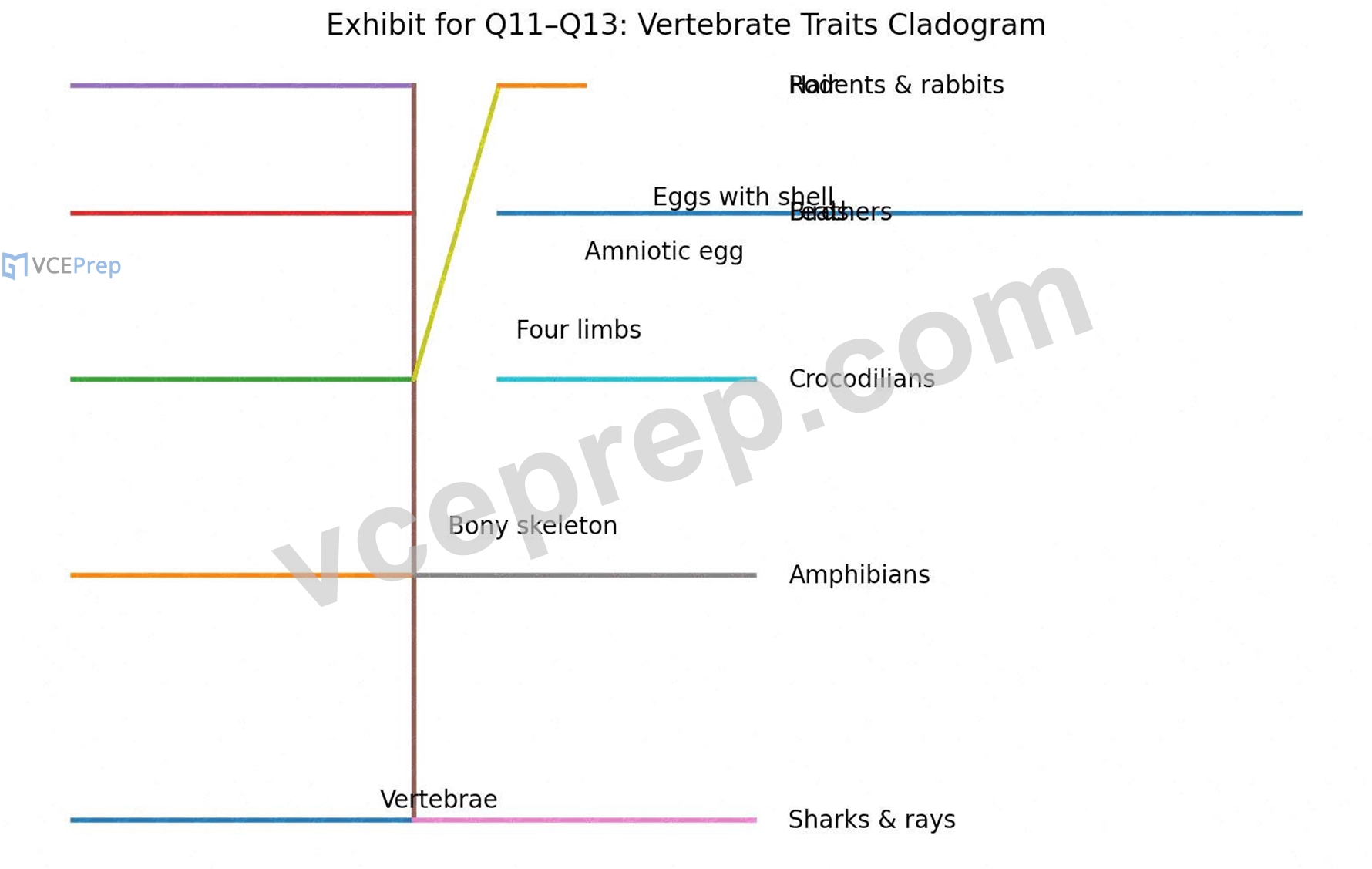
- A. Only species with hair produce amniotic eggs.
- B. Sharks and rays have vertebrae but lack a bony skeleton.
- C. Amphibians are four-limbed species but lack a bony skeleton.
- D. Birds are the only species that produce eggs with shells.
Answer: B
NEW QUESTION # 43 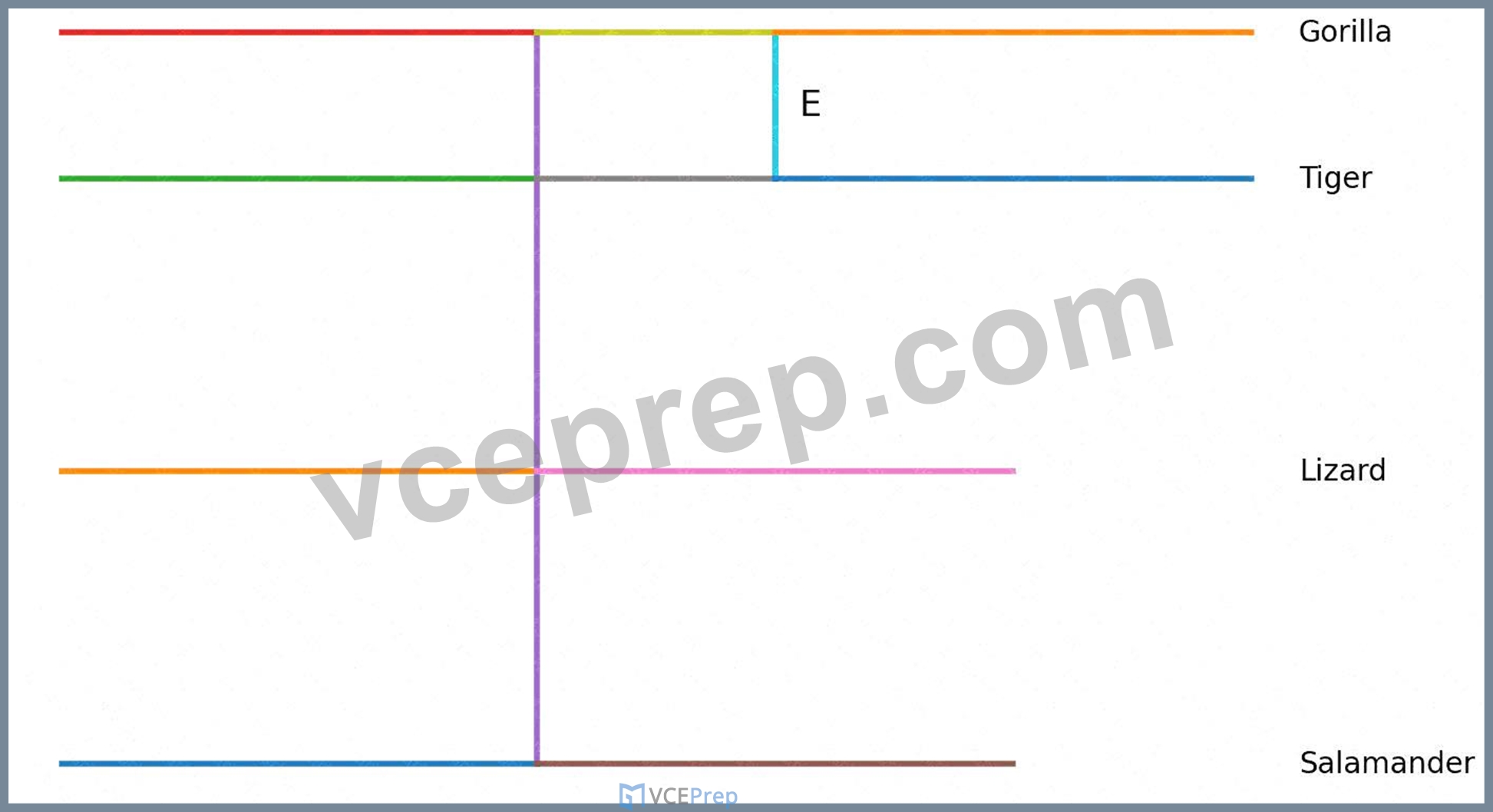
Using theTetrapod Cladogram (Node E), the common ancestor at locationEgives rise to which two organisms?(Choose 2 answers)
- A. Gorilla
- B. Tiger
- C. Lizard
- D. Salamander
Answer: A,B
NEW QUESTION # 44
A wildlife biologist studies how lions and zebras interactandhow physical factors (temperature, water) affect them in the Serengeti. Which level of ecological organization is being studied?
- A. Ecosystem
- B. Population
- C. Community
- D. Biosphere
Answer: A
NEW QUESTION # 45
Which genotype indicates an individual withno recessive alleles?
- A. aaBB
- B. aabb
- C. AAbb
- D. AABB
Answer: D
NEW QUESTION # 46
Coral reefs are built from calcium carbonate secretions of coral polyps and support diverse communities, but many are shrinking due to climate change. Which activity would have a negative impact on coral reef biodiversity?
- A. Developing technologies that reduce pollutants
- B. Increasing use of sustainable technologies
- C. Increasing use of fossil fuels
- D. Increasing the use of renewable energy sources
Answer: C
NEW QUESTION # 47
Arctic foxes sometimes follow polar bears and scavenge leftovers after the bears finish eating. What interaction occurs?
- A. Parasitism
- B. Herbivory
- C. Predation
- D. Commensalism
Answer: D
NEW QUESTION # 48
Using theTetrapod Cladogram (Node E)and standard vertebrate traits, whichtwo character statesare shared byboth Tiger and Gorilla?(Choose 2 answers)
- A. Loss of tail
- B. Three middle ear bones
- C. Fur
- D. Jaw
Answer: B,C
NEW QUESTION # 49
How doesgene flowtypically affect therecipientpopulation?
- A. Exacerbates genetic drift
- B. Exacerbates natural selection
- C. Increases genetic variability
- D. Increases random mating
Answer: C
NEW QUESTION # 50
Through which process does information flow fromRNA to protein?
- A. Transformation
- B. Transcription
- C. Translation
- D. Transposition
Answer: C
NEW QUESTION # 51
A gene sequenceCGCATACGGTACencodes a peptide (Arg-Ile-Arg-Tyr). A mutation inserts aGafter the secondC. How will this most likely affect the phenotype?
- A. No effect; only the second amino acid changes
- B. Affects phenotype; only the first amino acid changes
- C. No effect; protein will be identical
- D. Affects phenotype; all amino acids after the first will change (frameshift)
Answer: D
NEW QUESTION # 52
What is the process in which microbes convert glucose,in the absence of oxygen, intotwo ethanolmolecules andtwo carbon dioxidemolecules?
- A. Carbon fixation
- B. Phosphorylation
- C. Aerobic oxidation
- D. Fermentation
Answer: D
NEW QUESTION # 53
What is a primary characteristic ofperipheral membrane proteins?
- A. They cannot be post-translationally modified.
- B. They span the entire lipid bilayer, sometimes multiple times.
- C. Detergents or nonpolar solvents are necessary to remove them from the membrane.
- D. Weak intermolecular forces keep them attached to the lipid membrane.
Answer: D
NEW QUESTION # 54
The Mojave Desert is hot and dry. Roadrunners (endothermic, ground-dwelling birds) already have adaptations that reduce daytime heat gain. If average temperatures rise as predicted, how is theirplumagemost likely to change under natural selection?
- A. Become lighter to increase reflection of heat
- B. Become longer to increase heat absorption
- C. Become darker to absorb more environmental heat
- D. Become thicker to trap more heat
Answer: A
NEW QUESTION # 55
Which organism in this food web is a decomposer?
- A. Frog
- B. Damselfly
- C. Bacteria
- D. Algae
Answer: C
NEW QUESTION # 56
A subatomic particle has a relative mass of 1, isuncharged, and is located in thecenter(nucleus) of the atom.
What is this particle?
- A. Orbit
- B. Proton
- C. Electron
- D. Neutron
Answer: D
NEW QUESTION # 57
A cell has increased in size and is preparing to divide. Before division, DNA must be replicated.During which stageof the cell cycle is DNA replicated?
- A. Cytokinesis
- B. Synthesis
- C. G#
- D. G#
Answer: B
NEW QUESTION # 58
Which molecule is aninputto thelight-dependent reactionsof photosynthesis?
- A. Sugar
- B. Water
- C. Carbon dioxide
- D. Oxygen
Answer: B
NEW QUESTION # 59
What is a necessaryinputto begin the process ofcellular respiration?
- A. Carbon dioxide
- B. ATP
- C. Sugar
- D. Water
Answer: C
NEW QUESTION # 60
A subatomic particle is located in theoutermost shellof an atom. Because of its position, it strongly influences the atom'sreactivity. What is this particle?
- A. Neutron
- B. Proton
- C. Electron
- D. Nucleus
Answer: C
NEW QUESTION # 61
The Boreal forest includes trees (pine, spruce) and animals (lynx, elk) harvested for energy, food, or trade.
Which activity would negatively impact biodiversity there?
- A. Increasing use of renewable (instead of nonrenewable) energy
- B. Decreasing human population
- C. Increasing human population
- D. Decreasing logging throughout the Boreal forest
Answer: C
NEW QUESTION # 62
A student notes thatclub mossesform an outgroup, whileferns, gymnosperms, and flowering plantsform an ingroup on a plant cladogram (algal ancestor at the base). Whichbranching pointis the student considering?
- A. Leaves with branching veins
- B. Vascular tissue
- C. Seeds
- D. Embryo protection
Answer: A
NEW QUESTION # 63
(Use the exhibit "Simple Diffusion (No ATP)".) What process is depicted?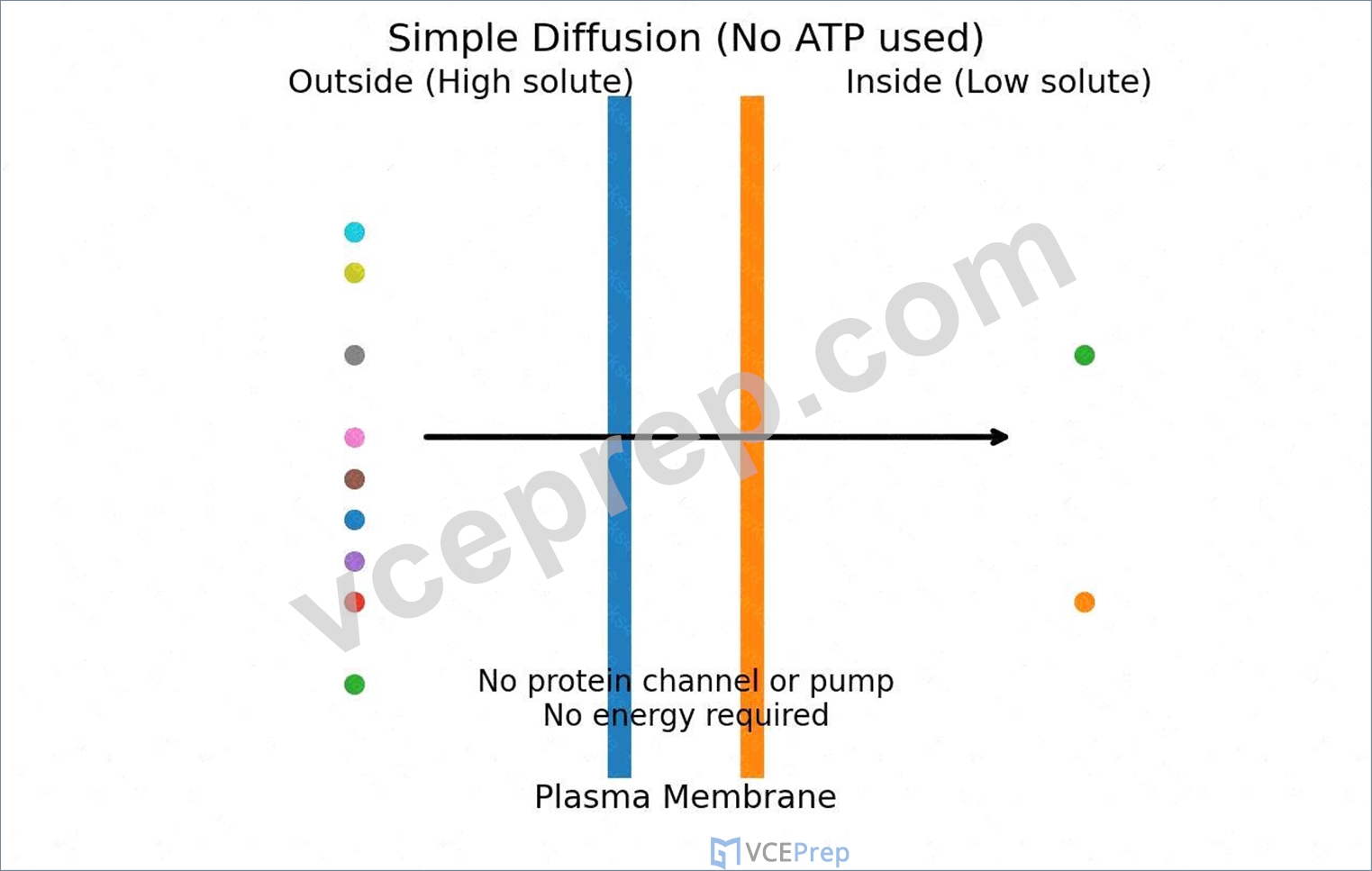
- A. Osmosis, which requires energy
- B. Active transport, which does not require energy
- C. Facilitated diffusion, which requires energy
- D. Simple diffusion, which does not require energy
Answer: D
NEW QUESTION # 64
In a cross-fostering experiment, half of thepurple-featheredbarn swallow eggs were raised bygray-feathered swallows; upon maturity, fostered young weregray, while those raised by their purple parents werepurple.
What best explains these results?
- A. Genes have no influence on feather color
- B. Feather color is influenced byboth genes and environment
- C. Feather color follows codominance
- D. Genes in transplant parents determine feather color
Answer: B
NEW QUESTION # 65
Agroup of lionsthat preys on deer constitutes which ecological level?
- A. Biome
- B. Community
- C. Ecosystem
- D. Population
Answer: D
NEW QUESTION # 66
......
Introduction-to-Biology Certification All-in-One Exam Guide Jul-2026: https://www.vceprep.com/Introduction-to-Biology-latest-vce-prep.html
Easily To Pass New Introduction-to-Biology Premium Exam: https://drive.google.com/open?id=1fhFocIjnIkT6MODcLqd0ERUCjGtHXSSz